

Technical article
The human exome-based amino acid pattern and its potential for health and nutritional science
This article is an expert interview with Rainer Johannes Klement.

By PD Dr. rer. nat. Rainer Johannes Klement
Origin story
The Importance of the 20 Proteinogenic Amino Acids
Of the several hundred amino acids found in nature, exactly 20 are encoded in the DNA of all terrestrial organisms and are incorporated into proteins after translation of the genetic code. These 20 so-called "canonical proteinogenic amino acids" appear to be naturally optimized for the construction of a wide variety of proteins, as they cover the possible ranges of the three fundamental amino acid properties – size, charge, and hydrophobicity – more evenly and broadly than other possible amino acid combinations.1 However, the optimal relative amount of each of these 20 amino acids that an individual organism needs to optimize its physiological functions is species-specific, and its estimation until recently relied on approximate empirical methods. With the concept of an exome-based amino acid pattern, a theoretically derivable optimal amino acid pattern is now available for the first time, which yielded promising results in preclinical studies regarding health optimization. It could become the new standard for defining the quality of food proteins.

Why it's not just about essential amino acids
A basic distinction is made between nine essential amino acids, which must absolutely be supplied through food, and non-essential amino acids, which the body can form itself from essential amino acids as needed. Besides that, there are...
There are also so-called semi-essential amino acids, whose synthesis in the body is insufficient under certain circumstances to meet the demand and which must then also be supplied through the diet. An example is glutamine, the demand for which is too high during strenuous physical exertion or serious illness (e.g. burns) for the body's own synthesis and release from reservoirs such as the muscles to suffice.
In all organs of the body, amino acid synthesis and degradation reactions are constantly taking place. Non-essential amino acids can in principle be synthesized from essential amino acids. However, the term "non-essential amino acid" is misleading, because, as is known from animal husbandry, optimal health requires the presence of all 20 proteinogenic amino acids in the diet.² This is because the synthesis of non-essential amino acids from essential amino acids is energetically inefficient and produces nitrogenous waste (ammonia), the detoxification of which is also energetically demanding.³
What determines protein quality?
The biological quality of a food protein is primarily determined by three factors: First, digestibility, i.e., the percentage of amino acids from the protein that are actually absorbed from the small intestine into the body. For example, due to the antinutrients they contain, the amino acids from plant-based proteins can only be digested to approximately 70-90% on average – in the case of sweet potatoes, it is only 52% (Table 2.7 in 3). In contrast, the digestibility of animal products is usually in the range of 95% to 100%. Second, the relative ratio of all amino acids to each other. Ideally, this should exactly match the body's current need for individual amino acids, without any individual amino acids being deficient or in excess. And third, in particular, the content of essential amino acids in relation to the requirement.4,5 Because if even one essential amino acid is missing, a protein that would contain this amino acid cannot be produced, even if more than enough of all other amino acids are present.
To illustrate this, consider an example: Let's assume we want to make several necklaces alternating one black, two silver, and one gold bead. Then the value of a box with 500 black, 1000
The value of a box containing 500 silver and 500 gold beads is higher than that of a box with 500 black, 500 silver, and 600 gold beads, because the contents of the first box can be completely utilized. From the second box, however, only half of the black and gold beads could be used compared to the first, as the silver beads would be limiting for necklace production, leaving black and gold beads unused. If we apply the production of bead necklaces to the synthesis of proteins from amino acids, the "leftover" amino acids mean that they must be broken down or converted, or ultimately oxidized, because the body has little capacity for storing amino acids. During these conversion and breakdown processes, the toxic substance ammonia is produced, which must be further converted to urea and excreted. This means conversely: The more amino acids in the correct ratio to the requirement are present in a food protein, so that a high percentage of them can be used anabolically (for building body proteins), the lower the resulting nitrogen waste. None of the essential amino acids should be limiting for protein synthesis, otherwise all other amino acids cannot be incorporated into proteins and are ultimately oxidized.
Exome Amino Acid Pattern (EAP) – the new gold standard for protein quality?
The measurement of dietary protein quality has traditionally been purely empirical. Several methods exist, each with its own strengths and weaknesses. But can the concept of protein quality also be derived theoretically? Indeed, recent studies provide theoretically grounded evidence that every animal species, including humans, has its own, albeit surprisingly similar, optimal amino acid pattern, determined by the DNA segments that code for proteins – the so-called exome. The exome refers to the entirety of all exons, i.e., the protein-coding regions in the human genome, which, depending on the species, comprises only about 1–2% of the total genome. An organism's exome thus contains information about the relative ratio in which individual amino acids are translated into proteins – the exome amino acid pattern, or EAP for short. The EAP provides a logical basis for deriving the individual amino acid requirements of a given species.
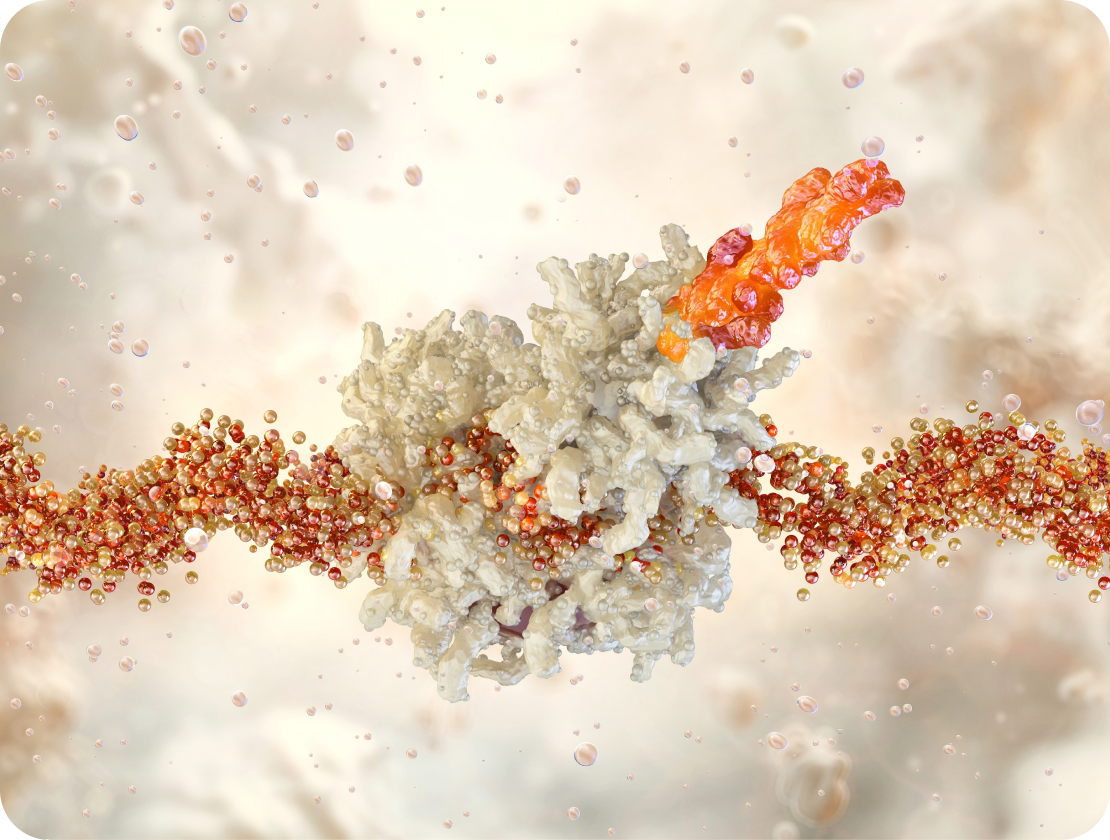
EAP optimizes growth, reproduction, saturation, and nitrogen balance in preclinical studies.
Whether the EAP represents the optimal protein source was first tested in a groundbreaking 2017 study in which Piper et al. fed fruit flies an EAP diet.7 The amino acid pattern was derived in silico (on a computer) as the average relative proportion of each amino acid based on its occurrence in the entire exome; it differed significantly from the amino acid composition in natural or laboratory proteins.8 Piper et al. showed that an EAP diet, compared to a diet with a non-adapted amino acid pattern, reduced uric acid production, was more satiating, promoted growth, and increased reproduction – even with a low total protein intake, which also led to an optimization of lifespan. While it is known that protein restriction (as well as calorie restriction in general) can extend the lifespan of organisms, this always comes at the expense of reproduction when using "normal" dietary proteins.
The same research group showed in a follow-up study published in 2023 that the EAP was also equivalent to an exome-based amino acid pattern further adapted to the different protein expression between males and females.9 One finding of this work was that, although gender should theoretically predict a different requirement for individual amino acids, in practice the main difference lies only in the absolute amount of protein required, not in the ratio of the individual amino acids to each other – the optimal pattern seems to be fundamentally the species-specific EAP. It would be interesting to clarify the logically following hypothesis that the EAP is also the optimal amino acid pattern regardless of age or physical activity, and that only the absolute protein requirement changes here (both with age and increased physical activity, the protein requirement increases).
Finally, in a third study, the research group around Matthew Piper showed that mice under protein restriction grew significantly better and were able to utilize the amino acids from the food anabolically if they received a diet whose amino acid pattern corresponded to the species-specific EAP.10 Importantly, in this
The study did not involve administering a mixture of synthetic amino acids, but rather the EAP was primarily created through a computer-optimized combination of three different milk powders (with only a small amount of additional individual amino acid supplements to get even closer to the EAP).
Overview of product information
Brief information about the EAP (Exome Amino Acid Pattern)

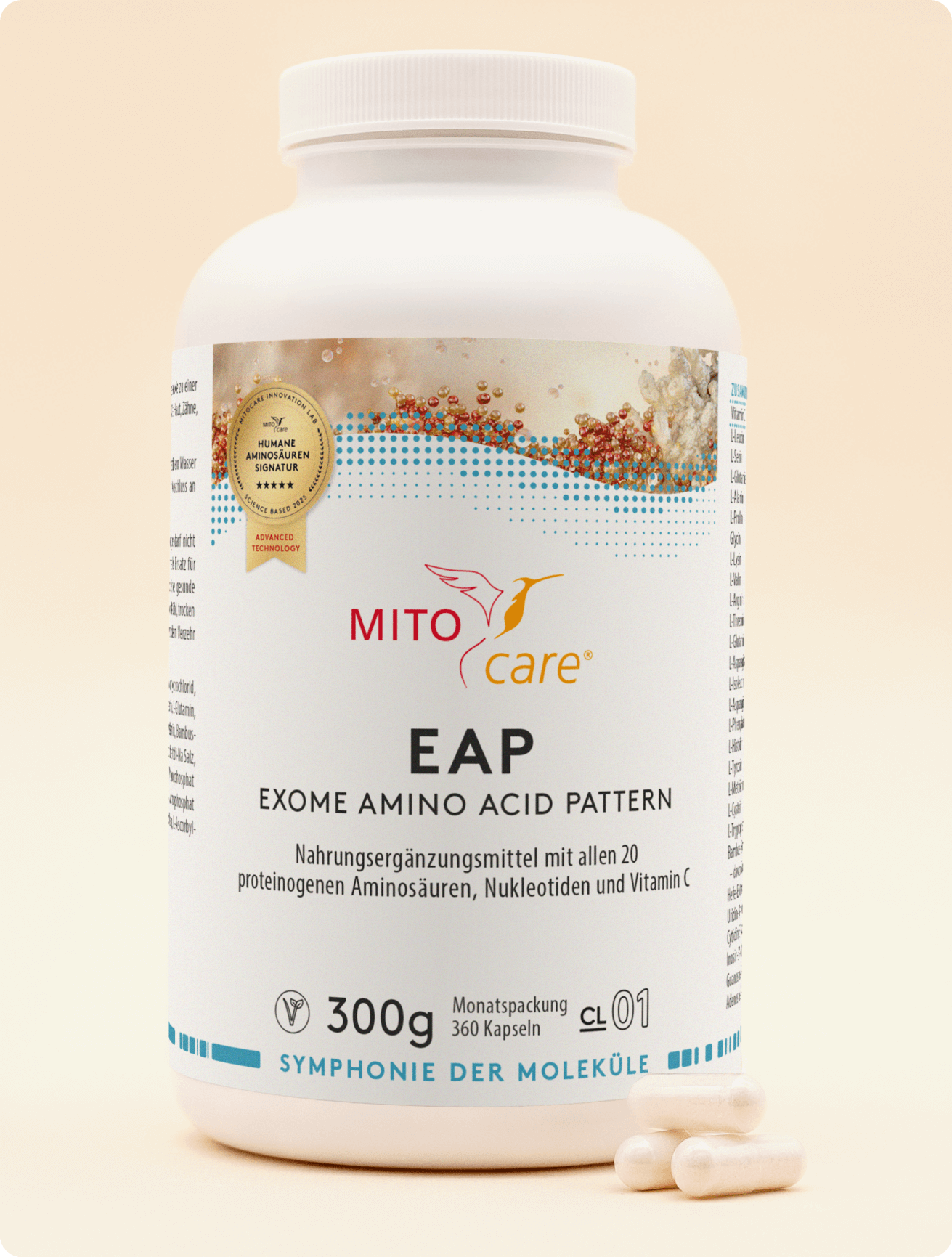
Exome-based amino acid complex: tailored to the DNA blueprint: Contains all 20 proteinogenic amino acids plus our nucleotide complex (building blocks of DNA & RNA) and vitamin C. This provides simultaneous support for protein and DNA function – for precise, gene-based nutrition.

High degree of innovation through exome-based profile with nucleotides, optimally bioavailable , usable in moderate doses with minimal risk – and clearly scientifically substantiated by current studies.

A versatile supplement – even for sensitive patients: Well-tolerated, tasteless, and gentle on the kidneys thanks to its reduced nitrogen load. Contains all 20 proteinogenic amino acids in a moderate dosage tailored to the DNA blueprint – for effective supply without unnecessary strain.
Promising results also in tumor-bearing mice
Another research group from China recently tested the potential of the EAP in tumor-bearing mice in a breast cancer model.11 The mice were divided into four different groups, all of which received paclitaxel chemotherapy, but differed in protein supplementation: One group received a nutritional supplement developed for cancer patients at a dose of 18 g/kg/day; one group received the same preparation at a dose of 18 g/kg/day, but adjusted by adding the underrepresented amino acids serine and glycine to more closely match the EAP of mice; one group received the unadjusted preparation, but at double the dosage (36 g/kg/day); and one group received no protein supplementation in addition to the standard diet.
First, it is important to note that supplemental protein, regardless of composition and dose, did not promote tumor growth compared to the group that received no protein supplement. However, mice receiving supplemental protein showed higher body weight in the third and final week of the experiment. This supports clinical guidelines that cancer patients should aim for a higher protein intake of 1.5–2 g/kg/day to compensate for systemic inflammation and tumor-induced muscle protein breakdown, without fear that additional amino acids might “feed” the tumor.12 In fact, cancer cells are largely independent of dietary amino acid intake, as they often utilize glutamine as an energy source, whose plasma levels are hardly affected by nutrition13, or they cannibalize their host through a process called macropinocytosis, where whole peptides and proteins are taken up into the cell and subsequently broken down into amino acids to supply anabolic and catabolic (energy-producing) substrates.14
A second important observation was that mice that received the EAP-adapted protein preparation were able to significantly increase their grip strength (an indicator of muscle strength) more than mice that received either no preparation or the non-adapted, glycine-
and received a serine-poor protein preparation. However, the group that received the latter in a double dose was able to increase its grip strength to a similar extent as the mice that received the adapted protein formula. Subsequent analyses of the transcriptomic profile of the skeletal muscle tissue showed that the expression of the complement 3 (C3) protein in the muscle cells of mice that had received the EAP-adapted protein was significantly upregulated. C3 is the central activator of the complement system and has been shown to promote muscle regeneration.15
A third interesting finding of the study was that protein supplementation counteracted the paclitaxel-induced gut dysbiosis. Interestingly, the strongest effect was observed with a double dose of the unadjusted protein supplement, suggesting that the quantity of amino acids might be more important for restoring chemotherapy-induced dysbiosis than the quality of the amino acids. However, there also seemed to be additional benefits of adapting the amino acids to the EAP, as the group with the adapted supplement showed a significantly higher relative abundance of bacteria of the genus *Alistipes* than the group with the unadjusted supplement; *Alistipes* bacteria are considered beneficial bacteria in this context. This finding is interesting, but at this point it is not sufficient to draw clear conclusions regarding EAP and the microbiome in mice, let alone in humans.
The Potential of EAP for Humans
Taken together, these preclinical studies therefore provide evidence that the species-specific EAP could indeed represent the optimal, genome-encoded amino acid pattern. This leads to three important aspects: Firstly, the EAP could serve as a new reference for evaluating the quality of natural protein sources. For example, I have shown that the EAP for humans is significantly more similar to animal proteins than to plant proteins, especially with regard to the proportion of essential amino acids, of which individual ones are often far too low in concentration in plants.⁵ The complete chicken egg, for example, already comes relatively close to the EAP¹⁶, which is consistent with the purely empirically derived and arbitrarily determined biological value of 100 for a chicken egg as a reference protein at the beginning of the 20th century. To...
Several studies exist on the high-quality protein content of eggs, e.g., a randomized controlled study on 6-9 month old infants, which showed faster growth through the additional intake of one egg per day17, or a case series of eight severely burned patients who achieved a rapid normalization of their serum protein levels with 35 eggs daily.18 Interestingly, the concept of the EAP (Essential Amino Acid Pattern) as an optimal amino acid pattern is thus indirectly confirmed by empirical observations due to its relative proximity (relative to individual foods) to the chicken egg and other animal protein sources.
The second important aspect, if EAP is indeed the optimal protein source, would be the potential for the animal feed industry and veterinary medicine. Feeding animals their species-specific EAP could minimize nitrogen excretion while maximizing animal growth and health.
Transferred to humans, I see great potential for the dietary supplement market and human health, which was also noted in a 2017 editorial on the study by Piper et al.8 MITOcare has now succeeded for the first time in producing a product that corresponds to the human EAP and therefore offers a wide range of possible applications.
Firstly, the product is interesting for all those who follow a vegetarian or, in particular, vegan diet, as it offers a simple way to improve the quality and quantity of protein intake. Furthermore, everyone could benefit who has an increased protein requirement, which is often not easy to meet through normal nutrition: (professional) athletes, older people or chronically stressed and sick individuals. A third interesting application for health-conscious people would be the substitution of normal dietary proteins with EAP to minimize the resulting nitrogen waste – provided that the results from the preclinical studies7 also apply to humans. Alternatively, the use of EAP during a fast would be conceivable to preserve valuable muscle mass while simultaneously using fats and ketone bodies as an energy source.
Summary and Outlook
In summary, the concept of an exome-based amino acid pattern (EAP) appears to have enormous potential for protein research, animal nutrition, and applied physiology. For example, it would be conceivable to combine foods within a menu so that the combined amino acid pattern approximates the EAP; this could also improve the nutritional situation of population groups with limited access to animal products or generally low-protein foods. A corresponding algorithm has already been developed by the research group around Matthew Piper at Monash University in Melbourne, Australia,19 and was first applied in the mouse study by Wu et al.10 According to personal communication with Matthew Piper and Louise Bennett, they are currently attempting to offer this algorithm commercially for the design of EAP-adapted products. Nutritional supplementation with EAP also has the potential to improve health for certain groups of people or under certain living conditions, as explained above. However, it must be noted that clinical data are currently lacking and that even optimal protein supply is useless if other dietary components (vitamins, trace elements, etc.) are not present in sufficient quantities. We can look forward to the first applications of EAP in human studies.
Sources & Bibliography
- Mayer-Bacon, C. & Freeland, SJ A broader context for understanding amino acid alphabet optimality. J Theor Biol 520, 110661 (2021).
- Wu, G. Nutritionally nonessential amino acids: A misnomer in nutritional sciences. Adv Nutr 8, 137–139 (2017).
- Wu, G. Amino Acids. Biochemistry and Nutrition. (CRC Press, 2022). doi:10.1201/9781003092742
- Adhikari, S., Schop, M., de Boer, IJM & Huppertz, T. Protein quality in perspective: A review of protein quality metrics and their applications. Nutrients 14, 947 (2022).
- Klement, RJ. The optimal amino acid pattern for humans and its implications for nutrition of cancer patients. Transl Breast Cancer Res 5, 25 (2024).
- Elango, R., Ball, RO & Pencharz, PB. Indicator amino acid oxidation: concept and application. J Nutr 138, 243–246 (2008).
- Piper, MDW et al. Matching dietary amino acid balance to the in silico-translated exome optimizes growth and reproduction without cost to lifespan. Cell Metab 25, 610–621 (2017).
- MacArthur, MR & Mitchell, JR. Feeding the genome: in silico optimization of dietary amino acid composition. Cell Metab 25, 486–488 (2017).
- Ortega, JG, Raubenheimer, D., Tyagi, S., Mirth, CK & Piper, MDW. Biosynthetic constraints on amino acid synthesis at the base of the food chain may determine their use in higher-order consumer genomes. PLoS Genet 19, e1010635 (2023).
- Wu, T. et al. Exome-informed formulations of food proteins enhance body growth and feed conversion efficiency in ad libitum-fed mice. Food Res Int 176, 113819 (2024).
- Gong, C. et al. Exome-based amino acid optimization: A dietary strategy to meet human nutritional demands and enhance muscle strength in breast tumor mice undergoing chemotherapy. J Agric Food Chem 72, 7089−7099 (2024).
- Arends, J. et al. ESPEN guidelines on nutrition in cancer patients. Clin Nutr 36, 11–48 (2017).
- Seyfried, TN & Chinopoulos, C. Can the mitochondrial metabolic theory explain the origin and management of cancer better than the somatic mutation theory? Metabolites 11, 572 (2021).
- Commissio, C. et al. Macropinocytosis of protein is an amino acid supply route in Ras-transformed cells. Nature 497, 633–637 (2013).
- Zhang, C. et al. Complement C3a signaling facilitates skeletal muscle regeneration by regulating monocyte function and trafficking. Nat Commun 8, 2078 (2017).
- Esumi, G. Chicken eggs are a practical and common exome-matched diet for multicellular eukaryotic organisms. Jxiv 1056 (2025). doi: https://doi.org/10.51094/jxiv.1056
- Iannotti, LL et al. Eggs in Early Complementary Feeding and Child Growth: A Randomized Controlled Trial. Pediatrics 140, e20163459 (2017).
- Hirshowitz, B., Brook, J., Kaufman, T., Titelman, U. & Mahler, D. 35 eggs per day in the treatment of severe burns. Br J Plast Surg 28, 185–188 (1975).
Study status of the product
Research as the foundation of our development.
Our Research & Product Development department continuously evaluates the current research findings to specifically optimize existing products and simultaneously develop new solutions as innovation drivers . We work closely with doctors, alternative practitioners, and other experts to ensure evidence-based and practical implementation . This results in products that meet the latest scientific findings and highest quality standards . Click the button for a direct insight into the underlying research.


