

Knowledge blog > Micronutrient lexicon
Nucleotides – the mini-batteries of your cells: What they do, when your need increases & why they are so important
Themen dieses Blogartikels:
Table of contents
- Modern lifestyle = cellular stress
- What are the four nucleotides?
- Nucleotides - building blocks & mini-batteries of cells
- From building block to energy source: How nucleotides work
- Storage of genetic information (DNA & RNA), energy currency (ATP – the “mini battery”), cell division and repair 6 Signal transduction in cells
- Why your body sometimes needs outside support
- When your body needs more nucleotides: Vegan diet, stress, age, and much more.
- What happens in the case of nucleotide deficiency?
- When should you avoid nucleotides?
- Targeted nucleotide strengthening: What you can do for your own cell health
- Conclusion: Small molecules with a big impact
- Sources & Bibliography
Modern lifestyle = cellular stress
Imagine your body as a construction site, operating around the clock. Every day, billions of cells are renewed or repaired – a process that requires building blocks and energy . When you're constantly under stress – whether from work, intense training, or lack of sleep – your cellular turnover increases: your cells divide faster, consume more energy, and need to be replaced more frequently. Modern lifestyle factors such as an unbalanced diet (e.g., vegan or highly processed), chronic stress, and advancing age can cause your body to struggle to keep up. The result: you feel exhausted, your recovery slows down, and your immune system isn't functioning at its best.
Why are nucleotides so important? They are involved in all these fundamental processes. You can think of them as the "mini-batteries" of cells , providing energy, and at the same time as the "blueprints" from which new cells are created. Let's take a closer look.
What are the four nucleotides?
People often talk about the "four nucleotides" – these are the four bases that occur in our DNA:
- Adenine (A) ,
- Guanine (G) ,
- Cytosine (C)
- Thymine (T)
These four organic bases form the "letters" of the genetic code. In RNA, the short-lived copy of DNA, the base uracil (U) is used instead of thymine. Each base coupled with a sugar and a phosphate group forms a nucleotide. When many nucleotides combine to form a long chain, it is called a polynucleotide – this is how the gigantic DNA and RNA strands in the cell nucleus are created.

Nucleotides – Building Blocks & Mini-Batteries of Cells
Nucleotides are small molecular all-rounders found in every cell. Chemically, they consist of three components that together form the nucleotide molecule:
- a sugar molecule (pentose, e.g. ribose in ribonucleic acid/RNA or deoxyribose in deoxyribonucleic acid/DNA),
- a phosphoric acid or several phosphate groups (phosphate residue)
- a nucleobase (also called nucleinbase).

The pentose acts as a simple sugar and differs depending on the type of nucleic acid. The phosphate group, as a phosphate residue, is responsible for linking the nucleotides into long chains (polynucleotides) and, together with the sugar, forms the so-called sugar-phosphate backbone of the nucleic acids. The C3 and C5 atoms of the sugar are crucial for chain formation, as they enable the linking of the nucleotides. ATP, a nucleotide with three high-energy phosphate groups, serves as the cell's universal "energy store" and provides the energy for metabolic processes, muscle movements, and brain activity.
From building block to energy source: How nucleotides, nucleosides & the DNA double helix work
The structure of the DNA double helix is formed by the linking of many nucleotides into two long chains that wind around each other in a spiral. In contrast to nucleotides, nucleosides consist only of a base and a sugar, without a phosphate group. The nucleobases (adenine, guanine, cytosine, thymine, uracil) are responsible for base pairing and thus for the storage and transmission of genetic information in DNA and RNA.
Storage of genetic information (DNA & RNA)
Nucleotides are the building blocks of your DNA . Like miniature blueprints, they store all the genetic information your cells need to grow, renew, and function. With each cell division, billions of nucleotides are assembled into new DNA – without nucleotides, there are no new cells. RNA, a kind of working copy of DNA, is also made up of nucleotides and is needed, for example, to build proteins.
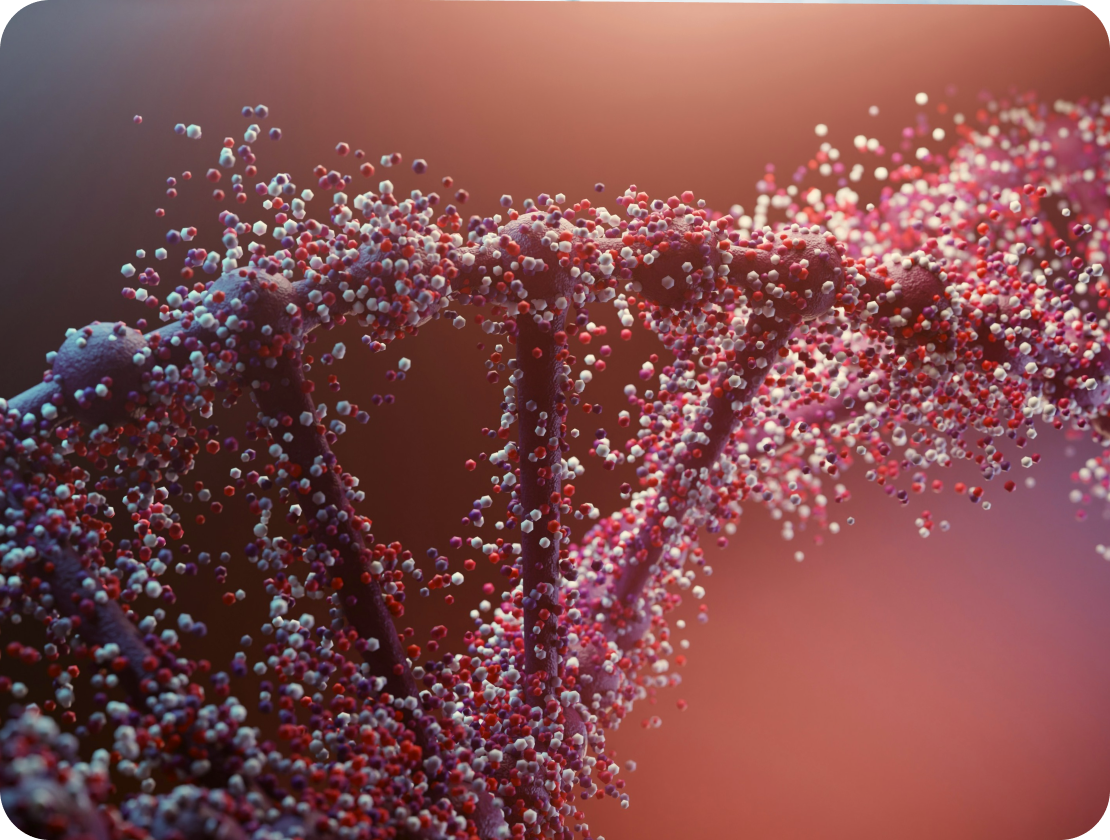
Small molecules, big impact: Nucleotides as the key to cell health
Nucleotides play a crucial role in DNA repair and synthesis, as a deficiency can impair a cell's repair capacity. The connection between nucleotides and nucleic acids is fundamental to cell function: DNA (deoxyribonucleic acid) carries genetic information, while ribonucleic acid (RNA) plays a central role in protein biosynthesis. Nucleotides are often offered in capsule form as dietary supplements to allow for targeted intake.
Nucleotides are required whenever cells divide or repair damage to their DNA. Growth, wound healing, and cell regeneration depend directly on the availability of sufficient nucleotide building blocks. Tissues with a high renewal rate—for example, the intestinal lining or immune cells— require a constant supply of nucleotides. Without this supply, cell regeneration slows down and repair processes stall.¹ Conversely, a good supply of nucleotides can promote wound healing and tissue repair,¹ as scientific studies have shown.
Nucleotides: Cell division / Repair & Signal transduction
Nucleotides are required whenever cells divide or repair damage to their DNA. Growth, wound healing, and cell regeneration depend directly on the availability of sufficient nucleotide building blocks. Tissues with a high renewal rate—for example, the intestinal lining or immune cells— require a constant supply of nucleotides. Without this supply, cell regeneration slows down and repair processes stall.¹ Conversely, studies suggest that an adequate supply of nucleotides could promote wound healing and tissue repair.¹
Nucleotides also play a role as signaling molecules . Some messenger substances that transmit signals within the cell (such as cAMP) are nucleotide derivatives. Furthermore, certain nucleotides serve as cofactors in enzyme reactions and help ensure that communication within and between cells runs smoothly.

The versatile nucleotide: Why your body sometimes needs external support
As you can see, nucleotides are true all-rounders – they store information, provide energy, support cell health, and regulate important processes. No wonder your body constantly recycles and recreates them to meet its needs. Interestingly, scientists even refer to nucleotides as "conditionally essential" nutrients². This means that although your body can generally produce nucleotides itself, this isn't sufficient under certain conditions². Especially when you're deficient in nutrients or under high stress, additional nucleotides can be beneficial to keep all bodily functions running smoothly.
For context: Adenine and guanine are chemically classified as purines, while cytosine, thymine, and uracil belong to the pyrimidines. For the nucleotides to function properly in your body, it's crucial that the correct amount of all four (or five, including uracil) bases is available. Only then can DNA and RNA be formed without errors and enough ATP be provided as an energy storage medium.
When your body needs more nucleotides
Under normal circumstances, your body recycles old nucleotides and produces new ones as needed. However, there are situations in which your nucleotide requirement increases significantly – often without you noticing it directly. Here are some examples of when nucleotides become particularly important for you and when additional intake might be beneficial:
1. For vegan or vegetarian diets
- Obtaining nucleotides naturally through food is not so simple. While nucleotides are present in all foods, they vary greatly in amount. Different foods contain different levels of nucleotides, with organ meats and some vegan products being particularly high, while fruits, vegetables, and fish contain lower amounts. The nucleotide content of foods varies considerably and is important for optimal nutrient intake. Plant-based foods generally contain significantly fewer nucleotides than animal-based foods .
- The highest concentrations are found in organ meats like liver or kidney – something that rarely appears on our plates these days. If you follow a vegan diet , your body therefore receives significantly fewer nucleotides directly from food. Additionally, you may be lacking important micronutrients (such asvitamin B12 or folate ) that your body needs for its own nucleotide synthesis. The consequence: your body has to produce all the nucleotides itself, which can be challenging during periods of high demand. The good news: there are vegan nucleotides available, derived from sources like yeast. You can supplement your diet with these to fill gaps – essentially making nucleotides available to vegans without relying on animal sources.

2. In cases of a weakened immune system
Do you feel like you catch every cold and your immune system is running on fumes? Then it's worth taking a look at the basics of cell function. Lymphocytes and other immune cells have an extremely short lifespan and must constantly regenerate. For this, they need many nucleotides – and they need to be readily available . Rapidly dividing tissues like the immune system often cannot meet their nucleotide requirements solely through new production , but depend on sufficient building blocks being available through recycling or food.³ If these are lacking, the immune response remains weak. To build up your immune system , in addition to... Vitamins and When considering minerals, it's also important to think about the foundation: nucleotides. Supplementation could support the maturation and activity of your immune cells¹ , which studies have shown to result in improved resistance to infection.³ Of course, this doesn't replace a healthy lifestyle – but it can give your immune system a boost , especially during periods of high stress or when you want to regain your strength after a long series of infections.
3. With age (Healthy Aging)
As we age, many cellular processes slow down. Cell division becomes more gradual, repairs take longer, and the immune system weakens. Many people notice this from their mid-40s onward: wounds heal more slowly, they become more susceptible to infections, and feel less energetic. An adequate supply of nucleotides can help in this regard. Free nucleotides could contribute to promoting declining cell regeneration² and supporting the immune system – essentially acting as additional building blocks and energy sources for aging cells. While further research is needed, initial findings suggest that supplemental nucleotides may have positive effects on gut health, the immune system, and overall well-being in old age .
4. During recovery after illness or injury
When your body fights infections or heals injuries, cell division and repair processes are in full swing. Your immune system builds up massive numbers of new immune cells , and damaged tissue must be replaced by fresh cells. During the Cell division produces daughter cells whose genetic stability is supported by a sufficient supply of nucleotides. This phase requires a particularly high number of nucleotides – comparable to the material requirements on a construction site that suddenly starts working extra shifts. Studies in animals and humans show that additional nucleotide supplementation can accelerate recovery after severe injuries, surgeries, or periods of severe immune stress.¹ Cell division proceeds more efficiently when enough "building blocks" are available. Therefore, nucleotides are sometimes used in clinical nutrition as immunomodulators¹ to, for example, improve intestinal healing after severe diarrhea or strengthen the body's defenses against infection. For you, this means that if you are recovering from an illness or, for example, struggling with overuse injuries after intensive training, nucleotides could be an interesting component of your nutritional strategy to promote cell renewal and regeneration .
5. During periods of high physical and mental stress
Intense physical activity or chronic stress can weaken the immune system and strain metabolism . During such times, repair and adaptation processes are running at full speed – and the need for nucleotides increases. Your body then classifies nucleotides as quasi- semi-essential² : external sources become necessary because its own production cannot keep up. Studies have shown that targeted nucleotide supplementation can improve both performance and certain immune functions in athletes² . For example, in a study of young men, a longer endurance time to exhaustion and increased immune cell activity were measured after two weeks of nucleotide supplementation². So, if you train intensively or are exposed to high levels of mental stress, it can be beneficial to take nucleotides to support your body . They can help optimize energy supply and strengthen your immune system , allowing you to remain more resilient².
6. Increased demand during periods of increased stress: Nucleotides during times of stress and regeneration
In summary: Whenever your body is in "overdrive" mode—during stress, growth, healing, or intense exertion—your nucleotide requirement increases. Current research suggests that nucleotides can have positive effects on regeneration, the immune system, and overall well-being in these situations, although further studies are needed. Your well-being can benefit from an adequate supply of nucleotides during such times, whether through a well-planned diet or high-quality supplements. Our understanding of the effects of nucleotides is based on current scientific studies and findings.
Advertisement
- 20 amino acids, supplemented by nucleotide complex – tailored to your genetic blueprint
- High bioavailability due to enzymatically digested amino acids
- Exom Match: Our composition is based on the protein structure of your body
- Tasteless & versatile
- Human Amino Acid Signature – for specific composition & innovation

What happens in the case of nucleotide deficiency?
Is there such a thing as a nucleotide deficiency? After all, the body produces these molecules itself. While there isn't a classic, diagnosed "nucleotide deficiency" like a vitamin deficiency, suboptimal nucleotide levels can contribute to certain symptoms. If there aren't enough building blocks available in the situations mentioned above, the following effects can be observed:
- Cellular energy balance: Nucleotides are components of energy-rich molecules such as ATP, which plays a central role in cellular energy metabolism. Biochemical research investigates how the availability of nucleotide building blocks affects energetic processes in cells. In experimental models, particularly animal studies, correlations between altered nucleotide supply and parameters of cellular energy balance have been described under certain conditions, for example, in the context of oxidative stress.
- Significance for the immune system: Immune system cells require a continuous supply of nucleotide building blocks for their division and function. Experimental studies, particularly in animal models, have investigated how a restricted supply of nucleotides affects immunological processes. These studies revealed changes in the immune response. These observations suggest that the availability of nucleotides may play a role in the regulation of immunological cellular processes.⁵
- Delayed healing and cell repair: Studies have shown that supplemental nucleotides significantly accelerate intestinal healing after injuries¹ – conversely, a deficiency could slow this healing process. The availability of nucleotides is considered a relevant factor for cellular repair and renewal processes, especially in tissues with high proliferative activity.
When the building blocks are missing: The consequences of a nucleotide deficiency for your cells
Nucleotides are fundamental building blocks of numerous cellular processes and are required for functions such as cell division, energy transfer, and tissue renewal. It's important to know, however, that nucleotides work in tandem with other micronutrients. A deficiency often goes hand in hand with deficiencies in, for example, B vitamins (folate, B12) , which are needed for nucleotide synthesis, or with a generally inadequate diet. The points mentioned above should therefore always be considered holistically. Nevertheless, this demonstrates how crucial nucleotides are for your well-being.
When should you avoid nucleotides?
As intensively as nucleotides are studied in research regarding their biological functions, a differentiated consideration of possible influencing factors is equally important. Particularly in connection with purine metabolism, scientific literature points out that nucleotides – especially purine-containing building blocks such as adenine and guanine – are broken down into uric acid in the human body.
Against this background, studies are investigating how an increased intake of purine-rich substances can affect uric acid metabolism. For example, a clinical study observed that a short-term diet high in nucleotides was associated with an increase in blood uric acid levels.⁴ Such findings are particularly relevant for individuals whose purine and uric acid metabolism is already medically monitored. It is preferable to take these substances only in a targeted manner, in consultation with a doctor, and in appropriate doses, if there is a genuine need.
Targeted nucleotide strengthening: What you can do for your own cell health
The good news: You can do a lot to ensure your cells have enough nucleotides. A balanced, nutrient-rich diet —including classic superfoods like legumes, mushrooms, or (for non-vegans) organ meats—provides the essential building blocks. Make sure you get enough B vitamins , as they support the body's own nucleotide synthesis. And in specific life situations—whether it's a period of intense exercise, job stress, recovery from illness, or simply aging— nucleotide supplements can make a valuable contribution to supporting your cell health and boosting your overall well-being .
Conclusion: Small molecules with a big impact
Nucleotides may not receive the same media attention as vitamins or minerals, but they form the invisible foundation of many life processes . Like miniature batteries for your cells , they provide energy for every movement and every thought. As building blocks of DNA, they ensure the constant renewal of your body – from skin cells to immune cells. Nucleotides are the fundamental building blocks of life, serving as essential components for the structure and function of nucleic acids such as DNA and RNA. In our modern world with its various stresses, this foundation can easily become unstable. Chronic stress, inadequate nutrition, or increased demands raise the body's need for nucleotides, while its own production reaches its limits.
More blog articles on the topic





This article is based on carefully researched sources:
Sources & Bibliography
- Grimble GK, Westwood OM. Nucleotides as immunomodulators in clinical nutrition. Curr Opin Clin Nutr Metab Care. 2001;4(1):57-64.
- Ostojic SM et al. Sublingual Nucleotides Prolong Run Time to Exhaustion in Young Physically Active Men. Nutrients. 2013;5(11):4776-85.
- Gil A. Modulation of the immune response mediated by dietary nucleotides. Eur J Clin Nutr. 2002;56(Suppl 3):S1-S4. Coelho MOC et al. High dietary nucleotide consumption for one week increases circulating uric acid concentrations but does not compromise metabolic health: a RCT. Clin Nutr ESPEN. 2022;49:40-52.
- JD Carver. Dietary nucleotides: cellular immune, intestinal and hepatic system effects. J Nutr. 1994; 124(1 Suppl):144S-148S.

