Knowledge blog > Sport & Performance
Strengthen bones, joints & tendons: For more fitness & less discomfort
Themen dieses Blogartikels:
Table of Contents
- Strengthening Tendons and Ligaments
- Structure of the Musculoskeletal System
- Why Tendons Lose Strength with Age
- Keeping Tendons Elastic
- How to Strengthen Tendons, Ligaments & Bones
- Exercises to Try
- Nutrition for Tendons & Ligaments
- Vitamins D & C for Strong Bones & Cartilage
- Traditional Plant Compounds
- Proteins Strengthen Muscles & Bone Substance
- Manganese, Selenium & Copper Strengthen Connective Tissue
- Magnesium & Calcium for Bone Function
- Which Foods Provide the Right Nutrients?
- Don't Forget to Drink
- What You Should Avoid
- Nutrient Supply via Dietary Supplements: Does It Make Sense?
- References
Strengthening Tendons and Ligaments: Why This Is Especially Important in Sports
Want to strengthen your tendons and prevent sports injuries? Almost one in three people in Germany exercises regularly for one to three hours a week.¹ But your body only gets the full benefit of sport if injuries such as torn ligaments, tendon sheath inflammation or knee injuries don't get in the way.
The good news: With the right combination of exercise and nutrition, you can do a lot for strong tendons, ligaments and joints. We'll show you what matters and which nutrients and foods really count.
Some of the most popular sports include:
- Cycling
- Jogging
- Swimming
- Yoga
- Fitness
- Football
Whether in a club or on your own, indoors or outdoors, men and women of all age groups name their health as the main motivation for being active.
Typical sports injuries include:
- Pulled muscles
- Knee or ankle injuries
- Torn ligaments
- Tendon sheath inflammation (tenosynovitis)
- Bone fractures
What moves your body?
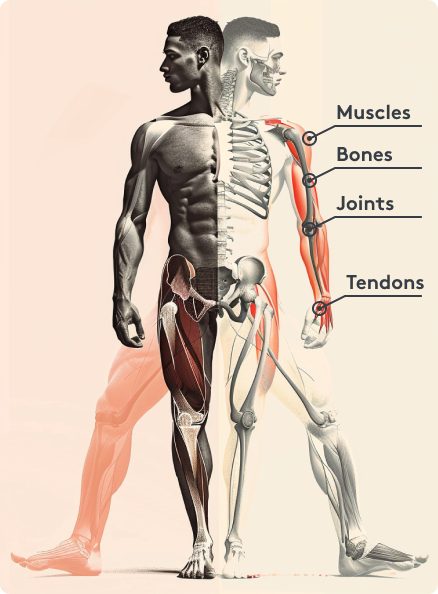
These structures ensure that you are stable and flexible and can perform at your best in sports:
- Tendons, such as the Achilles tendon, are made of connective tissue and are protected by a tendon sheath. They form the connection between muscle and bone. In order for movement to occur, they transfer muscle power to your bones.
- Bones are hard structures that form the skeleton that supports you every day.
- Muscles are soft tissue that enable movement by contracting and relaxing.
- Joints are junctions between two or more bones. For example, they allow you to move your hand in different directions or bend your knees and elbows.
- Ligaments are elastic connections between the bones and stabilize the joints.
A distinction is made between the active musculoskeletal system and the passive supporting system: the skeletal muscles and tendons form the active part, while joints, bones and ligaments take on a supporting function.
Why Tendons Lose Strength as We Age
As joints, tendons and ligaments are constantly working, they wear out over the course of a lifetime. The elasticity of tendons decreases with age. However, diseases such as osteoarthritis or overuse and underuse and injuries also make certain movements increasingly difficult.
Exercises and a balanced diet help to ensure that your body's movement elements remain functional for a long time.2 A strong musculoskeletal system helps you to focus on your performance during sport, as you don't have to worry as much about injuries.
Keeping Your Tendons Flexible: How to Keep Your Tendons Supple
Tendons aren't rubber bands. For tendons, elasticity means they can absorb force, store it and release it again, much like a spring. That's exactly what makes you efficient when running and jumping. With age, too little exercise and an inadequate supply of nutrients, this ability declines and your tendons become stiffer.
These factors help keep your tendons elastic:
- Collagen is the main component of your tendons and gives them strength and resilience.
- Vitamin C contributes to normal collagen formation. Without enough vitamin C, your body can't produce functional collagen.
- Water keeps connective tissue supple.
- Regular exercise stimulates the formation of new collagen.
How to Strengthen Your Tendons, Ligaments, and Bones Through Exercise
Regardless of your fitness level, the following tips will help you do something good for your tendons and ligaments with exercise:
- Although everyone knows this advice, few people still take it to heart: sitting is poison for muscles, tendons etc. So incorporate as much movement as possible into your everyday life, make phone calls standing up and take the stairs.
- Include sports in your training plan that are easy on the joints, such as swimming or cycling.
- Yoga or Pilates will improve your flexibility. Strength, endurance and coordination training also help to prevent injuries.
- Invest sufficient time in warming up and stretching. A cool-down is a must after sport. Plan 10 to 15 minutes each for warming up and warming down.
- The right technique plays an important role in protecting tendons and joints. For more demanding sports in particular, it makes sense to learn how to do them correctly first.
- When it comes to sports equipment and clothing, you should focus on quality. When jogging, for example, it is worth buying shoes that are tailored to your running movements and your joints.
Exercises to try out
There are numerous exercises that you can integrate into your training to strengthen tendons and ligaments. Here are three sources of inspiration from experts:
- A research group at Berlin's Humboldt University has investigated the consequences of sporting stress on the tendon and the possibilities of targeted tendon training in competitive sport. This has resulted in the “Berlin Method”. Background information and links can be found at the Federal Institute for Sports Science.
- The State Sports Association of North Rhine-Westphalia provides exercises for the prevention of sports injuries that can also be used at home. The focus is on strength, mobilization, sensorimotor skills and coordination.
- The German Knee Society has developed the STOP-X program together with doctors, physiotherapists and sports scientists. It supports rehabilitation after a knee injury, but also offers exercises for prevention.
Nutrition for Tendons and Ligaments: What Matters Most
Alongside exercise, nutrition is the key to strong tendons, strong bones and supple ligaments. A balanced diet provides your musculoskeletal system with minerals and trace elements.
We briefly introduce you to the most important nutrients here. You can read detailed information on individual micronutrients at your leisure in our micronutrient dictionary.
Advertisement
- Specifically designed for the musculoskeletal system
- With glucosamine, zinc & chondroitin
- Plant complex of lycopene, frankincense, rutin from buckwheat, nettle, garlic & turmeric
- Supplemented with collagen, hyaluronic acid, and MSM
- No fillers or flavorings
- Developed with doctors & experts
- Gluten and lactose free

Vitamins D and C for robust bones and cartilage
Vitamin D influences muscle strength and is involved in bone metabolism: Among other things, it ensures that you have sufficient calcium and phosphate available.
Vitamin C also plays an important role for your joints. Among other things, the water-soluble vitamin is involved in the formation of collagen fibers, which are found in the cartilage layer in the joints.
This elastic layer of fibers is important for the smooth functioning of the joints. Studies have shown that collagen can, for example, help to reduce pain in the knee joint and improve joint comfort.3
Traditional Herbal Remedies: Frankincense, Turmeric, and Stinging Nettle
In addition to the scientifically studied micronutrients for connective tissue and bones, many people also turn to traditionally known plant compounds that have long been associated with joint strain.
Frankincense is rich in boswellic acids, a group of compounds traditionally credited with a role in relation to the joints. Turmeric (Curcuma longa) owes its bright yellow colour and its good reputation mainly to the curcuminoids it contains, above all curcumin, the best-studied compound in the plant. Turmeric is one of Asia's most traditional spice and medicinal plants and has been used there for centuries both in cooking and in Ayurvedic medicine.
Nettle also has a long tradition in this context: According to the European Medicines Agency (EMA), the relief of minor joint pain is one of the officially recognised traditional uses of nettle leaf and nettle herb. This indication sits alongside nettle's better-known use for supporting the body's water balance and shows how versatile the plant has traditionally been.
Im Deutschen heißen Curcuma und Kurkuma zwar beides, im Englischen gibt es dafür aber nur „turmeric“. Deshalb habe ich den Namenszusatz durch den botanischen Namen ersetzt.
Proteins strengthen muscles & bones
Proteins are the basic building blocks of cells and help to maintain bone substance. They also help to build muscle.
Manganese, selenium & copper strengthen the connective tissue
Tendons and ligaments are made up of connective tissue. Manganese, selenium and copper are important to strengthen it, as these trace elements are involved in the structure of connective tissue.
As the connective tissue fibers have little blood supply, they need to be supplied with nutrients via the connective tissue fluid, which is found in the tendon sheaths, for example.
Advertisement


Magnesium & calcium for bone function
If you sometimes struggle with ailments such as sore muscles, you will certainly be aware of the positive properties of magnesium. This bulk element is important for normal muscle function and supports muscle relaxation.
Its natural counterpart is the bone building block calcium, which regulates muscle contraction. Almost all of your body's calcium reserves are bound up in bone mass. For this reason, this mineral should have a fixed place in your diet.
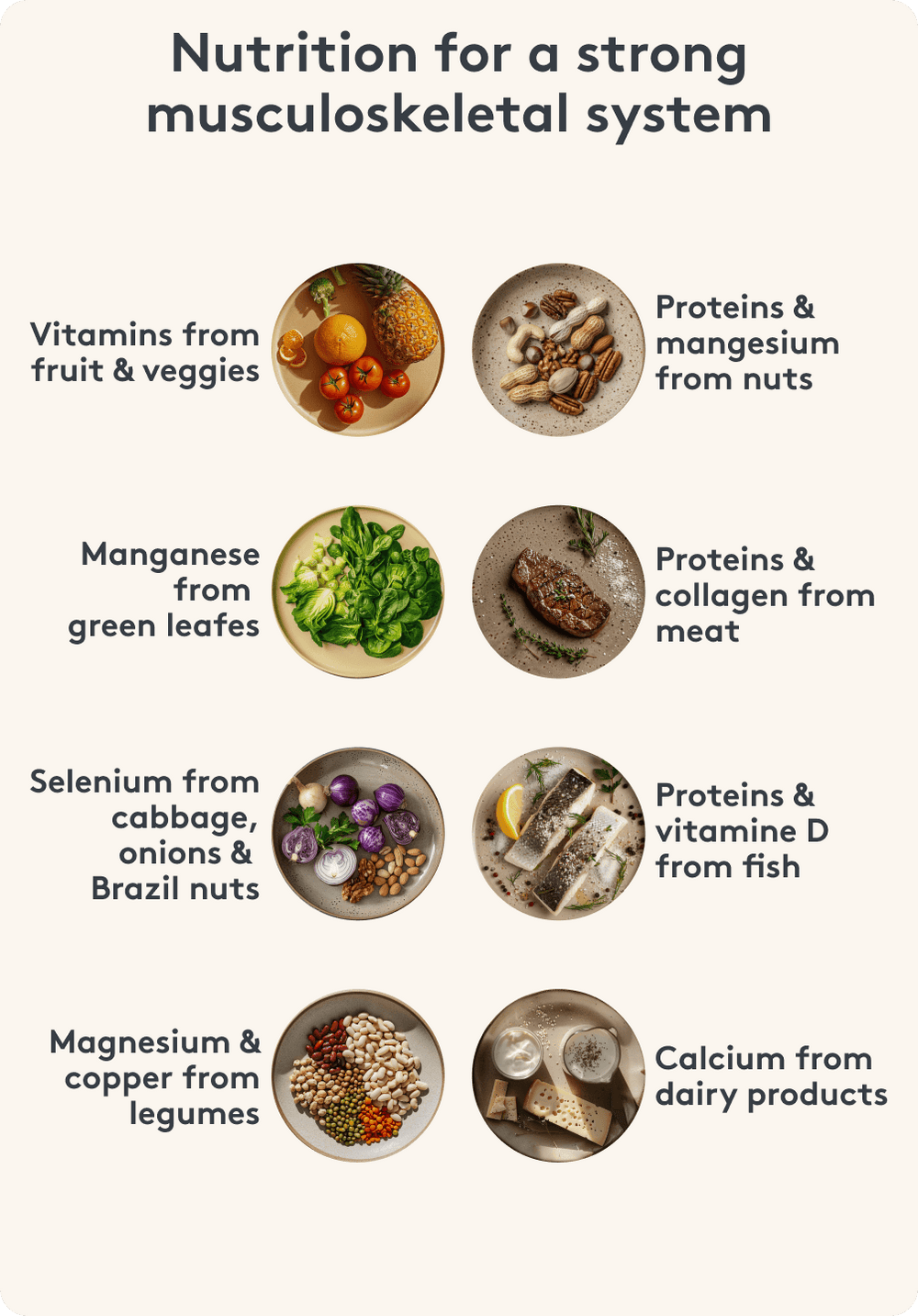
Which foods contain nutrients for tendons, connective tissue & joints?
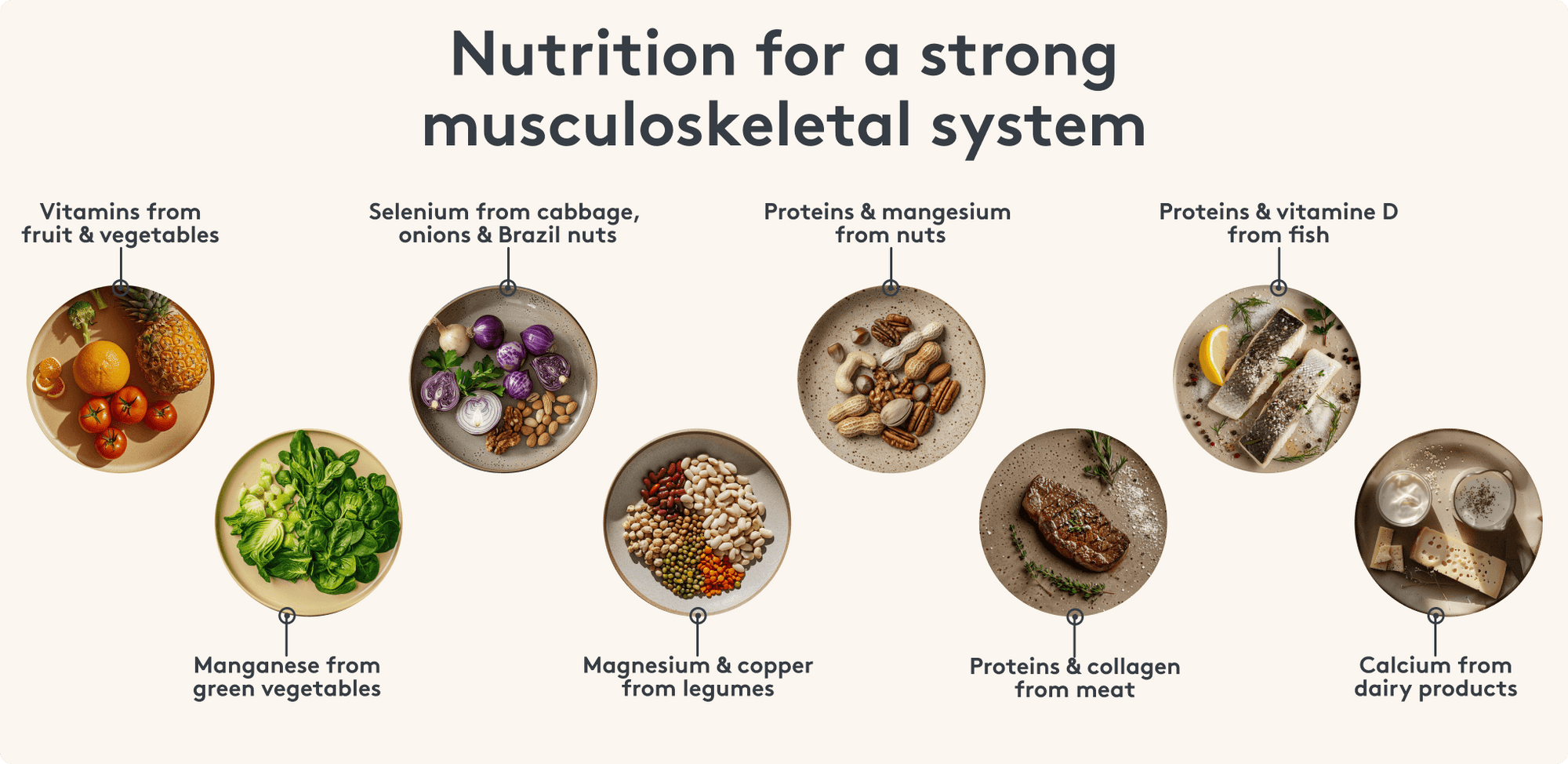
- Many types of fruit and vegetables such as oranges, pineapple, broccoli and tomatoes contain vitamin C. Broccoli also contains calcium.
- Pulses provide magnesium and copper. Copper is also found in cashew nuts and cocoa powder.
- Green vegetables such as kale are a source of manganese.
- Selenium is found in Brazil nuts, cabbage and onions.
- Nuts provide you with protein and fill your magnesium stores.
- Meat contains protein and collagen.
- Fish also contains protein and vitamin D. In addition, natural sunlight helps your skin to produce the sun vitamin D itself.
- Dairy products and calcium-rich plant drinks provide your body with calcium.
Don't forget to drink
Sufficient water intake helps to compensate for the loss of fluid caused by perspiration. But your joints also need water. It surrounds your joints in the form of synovial fluid and acts as a lubricant that reduces friction between cartilage and tissue. Muscles are also largely made up of water. So you benefit in several ways from drinking enough when you exercise.4
Display
- Specially developed for the musculoskeletal system
- With glucosamine, zinc & chondroitin
- Plant complex of lycopene, frankincense, rutin from buckwheat, nettle, garlic & turmeric
- Supplemented with collagen & hyaluronic acid & MSM
- No fillers or flavorings
- Developed with doctors & experts
- Gluten & lactose free
What you'd better do without
You can prevent inflammation and pain not only with exercise and nutrients, but also by reducing or completely avoiding foods that promote inflammation. In addition to alcohol and sugar, these include highly processed foods such as sausages or products that contain a lot of white flour.5
Nutrient supply via food supplements: does it make sense?
If you consume fresh food and eat a balanced diet, you will usually get all the important minerals, vitamins and nutrients from your food. However, athletes with a strict sports program or people who follow a vegetarian or vegan diet may have an increased need for nutrients.
In this case, it can be useful to support the strengthening of your tendons and joints with nutritional supplements. Even if you are recovering from a sports injury, an extra portion of nutrients can be helpful for your regeneration.
Your physiotherapist or doctor will be happy to provide you with information and advise you on which substances can get you back on track and protect you from injury in the future.
More blog posts on this topic:





This article is based on carefully researched sources:
Bibliography & Sources
- Study by Techniker Krankenkasse and Forsa: Move, Germany!, 2022
- Ticinesi A, Lauretani F, Milani C, et al. Aging Gut Microbiota at the Cross-Road between Nutrition, Physical Frailty, and Sarcopenia: Is There a Gut-Muscle Axis?. Nutrients. 2017;9(12):1303. Published 2017 Nov 30. doi:10.3390/nu9121303
- Benito-Ruiz P, Camacho-Zambrano MM, Carrillo-Arcentales JN, et al. A randomized controlled trial on the efficacy and safety of a food ingredient, collagen hydrolysate, for improving joint comfort. Int J Food Sci Nutr. 2009;60 Suppl 2:99-113. doi:10.1080/09637480802498820
- Lorenzo I, Serra-Prat M, Yébenes JC. The Role of Water Homeostasis in Muscle Function and Frailty: A Review. Nutrients. 2019;11(8):1857. Published 2019 Aug 9. doi:10.3390/nu11081857
- Uebel U. Anti-inflammatory nutrition. Uro-News. 2021;25(9):40-43. doi:10.1007/s00092-021-4657-4

