

Knowledge Blog > Health
Oxidation & Acidosis – when your mitochondria get out of balance
Themen dieses Blogartikels:
Mitochondria & ATP: How your cell energy is generated & what can slow it down
Our mitochondria – often referred to as the “powerhouses of the cell” – are the linchpin of our energy production¹. Besides generating energy, mitochondria perform numerous other functions, such as regulating cell metabolism and controlling programmed cell death. In each of your approximately 30 trillion cells, they ensure that usable energy (ATP) is produced from nutrients. It is essential that this complex process runs smoothly.
However, modern lifestyles – from stress and unbalanced diets to intense exercise – can disrupt this process. Two common problems are oxidative stress (oxidation) and acidosis . Both are virtually invisible energy drains in your cells that can gradually impair your performance. In this article, we explain, based on sound scientific principles, what happens in your cells and how you can counteract these effects, and highlight the crucial role mitochondria play in your health. (For basic information on what mitochondria are and why we at MITOcare place such high value on them, please read our detailed blog article on mitochondria .)
The four steps of cellular energy production
For energy to be produced from nutrients, a four-step biochemical process takes place in your body. Mitochondria, as cell organelles, are essential components of cells and play a central role in cellular metabolism. They are also known as the cell's powerhouses because they meet the majority of the cell's energy needs. Mitochondria are structured with a double membrane, a matrix, and their own DNA, making them unique cell organelles. A single mitochondrion (singular) refers to one of these structures, while mitochondria (plural) refers to all of these organelles in a cell. Here is an overview of the four steps of energy production :
1. Glycolysis
In the first step, glucose (dextrose) is broken down in the cell plasma into smaller molecules—namely pyruvate. Amino acids can also be incorporated here. Glycolysis provides energy quickly, but only in small amounts—a net total of 2 ATP (energy units) are produced per glucose molecule. The special feature: glycolysis can occur without oxygen (anaerobically).
Glycolysis generally occurs continuously, regardless of whether oxygen is present or not. If sufficient oxygen is available (e.g., at rest or during light exertion), the resulting pyruvate is transported to the mitochondria. There, it is completely metabolized, resulting in efficient, clean energy production.

If there is not enough oxygen available (e.g. during intense exercise, sprints, muscle tension), the pyruvate cannot be processed further because the mitochondria need oxygen for this.
Instead, the pyruvate is converted to lactic acid (lactate). In this process, a cofactor (NAD⁺) is regenerated, allowing glycolysis to continue briefly and providing at least some energy². The price: Lactate is produced, and protons (H⁺) accumulate – the cellular environment becomes more acidic.
Note: Glycolysis provides fast but limited energy – mitochondria then ensure efficient, oxygen-dependent ATP production.
2. Citric Acid Cycle
In the second step, pyruvate—provided oxygen is present—enters the mitochondria. There, it is converted to acetyl-CoA and fed into the citric acid cycle (also known as the Krebs cycle). In this cycle, the acetyl groups are further broken down into CO₂. The mitochondrial matrix is the central site where these important metabolic processes take place. More importantly for us, this process primarily produces high-energy electron carriers, namely NADH and FADH₂ . Breakdown products of fatty acids and certain amino acids also contribute to this process. Citrates are chemical compounds that play a key role in the citric acid cycle and serve as a link in the metabolic process. The importance of this compound is also evident in the body's pH balance, as citrates can act as buffers. The citric acid cycle can be thought of as the hub of metabolism—it provides the "fuel" (NADH/FADH₂) for the next step.
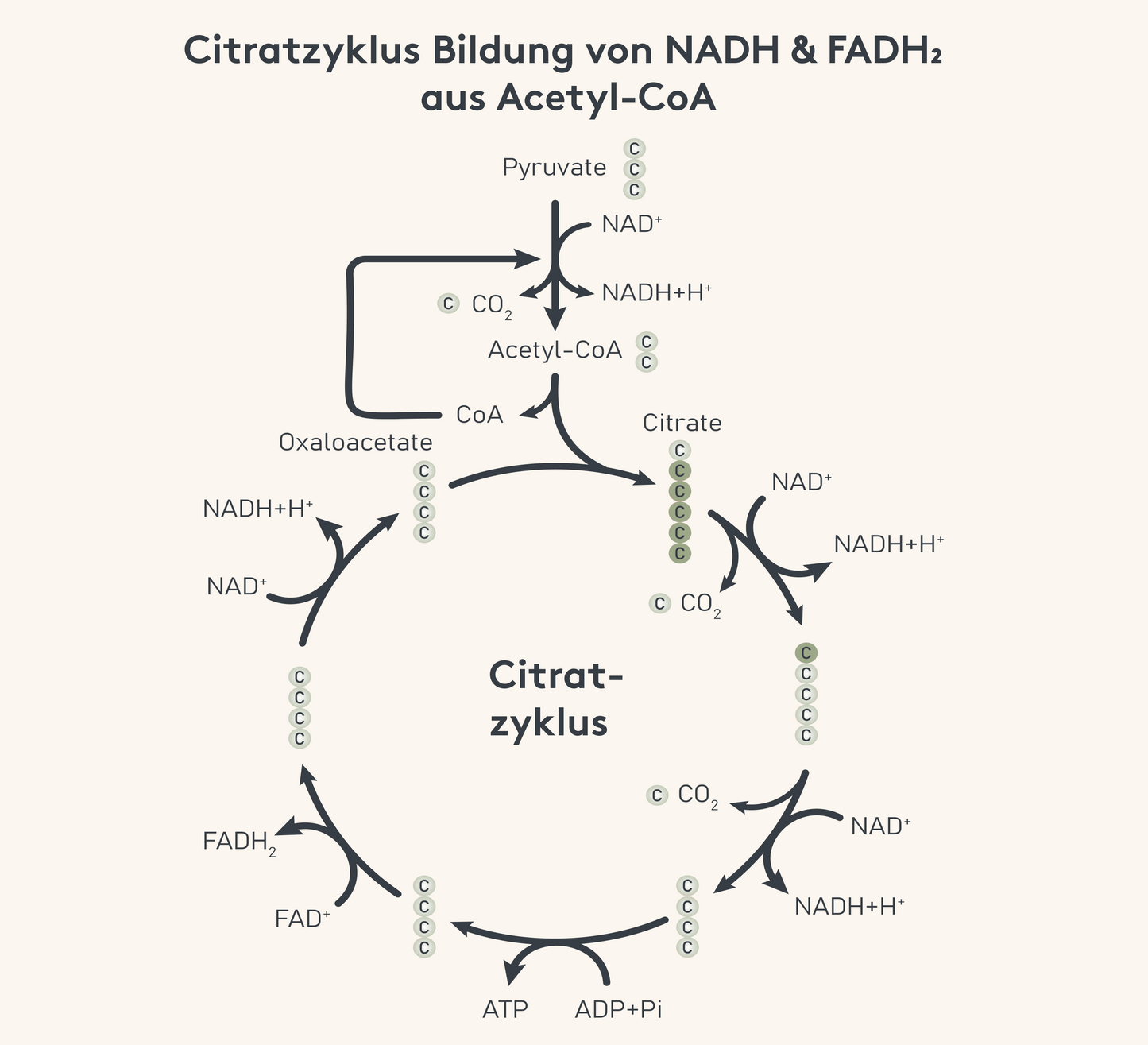
3. Electron Transport Chain (Oxidative Phosphorylation):
In the third step, the "magic" of energy production happens: In the mitochondrial respiratory chain, the electrons bound in NADH and FADH₂ are used to produce massive amounts of ATP. The electrons travel through a chain of protein complexes in the mitochondrial membrane.
The structure of the mitochondrial membrane, particularly the folding of the cristae, is crucial for efficient energy production, as it increases the surface area for the respiratory chain. Various molecules, such as glucose, pyruvate, and electrons, are involved in the energy-generating reactions. Numerous biochemical processes take place in the mitochondria, involving different substances like NADH, FADH₂, and oxygen. The respiratory chain consists of several reactions that ultimately lead to the production of ATP. Oxygen is required as the final electron acceptor—without O₂, this process stops. If everything runs optimally, around 30–32 ATP molecules are produced per glucose molecule (compared to 2 ATP from glycolysis)². However, where electrons flow, there is a risk that some will "take a wrong turn." In fact, a small proportion of the electrons escape from the chain and react prematurely with oxygen. This produces reactive oxygen species (ROS) such as superoxide anion (O₂⁻) or hydrogen peroxide¹.

These free radicals can attack cell structures – similar to rust attacking metal. Fortunately, the cell has its own antioxidant system: enzymes such as superoxide dismutase (SOD) and catalase capture and neutralize ROS¹. Antioxidant molecules such as coenzyme Q10 (which is itself part of the respiratory chain) and glutathione also act as buffers. However, if too many ROS are produced, the system becomes unbalanced – leading to oxidative stress (more on this later).
Remember: Oxygen is the key to the high performance of your mitochondria: It turns nutrients into energy – but also free radicals, which your body neutralizes with antioxidants.
Display
- Specially developed for the immune system & energy balance
- From natural raw material sources: OPC from grape seed extract with vitamin C
- Made from 3 essential amino acids: Glutamic acid, Cysteine & Glycine
- No fillers or flavors
- Developed with doctors & experts
- Delicious taste & easy to dose
- vegan & vegetarian, free from lactose & gluten

4. Waste Products & Detoxification:
Finally, energy production generates "waste products," particularly oxidative byproducts from step 3. These must be continuously eliminated to prevent damage. The body accomplishes this through various detoxification enzymes , such as the previously mentioned SOD, the hydrogen peroxide-degrading glutathione peroxidase, and catalase. Many of these protective enzymes rely on micronutrients as cofactors—for example, glutathione peroxidase requires the trace element selenium , and SOD exists in variants containing manganese , zinc , and copper . If these protective systems are intact, ROS are neutralized. If this process fails, oxidative damage accumulates : cell membranes , DNA, and proteins can be "oxidized" by free radicals and their function impaired. In the long term, this contributes to cell aging and inflammatory processes.
When energy production goes haywire
Sometimes, the body's energy production processes don't run smoothly. The reasons are varied – often a nutrient deficiency , an excess of oxidative processes , or metabolic acidosis plays a role. Different types of acidosis exist, such as local and chronic forms, which can affect the body in different ways. These factors are often interconnected and reinforce each other. Here you'll learn what happens at the cellular level.
The focus is on the function of mitochondria, which play a crucial role in various metabolic processes.
Advertisement
- 40 bioactive premium active ingredients – everything your mitochondria need as fuel.
- Supports cellular energy, energy levels, performance and efficiency.
- Unique complex developed by our team of doctors and experts.
- Contains vitamins, minerals, amino acids, medicinal mushrooms & many other premium active ingredients.
- No additives or fillers.

Nutrient deficiency: Are important micronutrients missing as co-factors?
Mitochondrial enzyme systems require numerous vitamins and minerals as cofactors. A persistent deficiency of even a single essential vitamin can slow down the entire energy process⁵. The B vitamins are particularly critical: with the exception of folic acid (B9) , all B vitamins are directly involved in steps of cellular energy production⁵. Vitamin B₁ (thiamine), for example, is essential as thiamine pyrophosphate for pyruvate dehydrogenase , the process by which pyruvate enters the citric acid cycle⁵. If B₁ is severely deficient (as in beriberi), pyruvate accumulates and is increasingly converted to lactate – leading to lactate hyperacidity despite an otherwise sufficient supply of oxygen. Similarly important are niacin (B₃) as a component of NAD(H), riboflavin (B₂) as part of FAD(H₂) and pantothenic acid (B₅) as a component of coenzyme A5.
Magnesium and iron also play important roles: Magnesium stabilizes and transports ATP (every ATP unit exists in the body as Mg-ATP)⁵, and iron, as a component of cytochromes, is involved in electron transfer in the respiratory chain⁵. In short: Without micronutrients, there is no energy metabolism. Even a moderate deficiency (for example, due to an unbalanced diet) can lead to nonspecific fatigue⁵ – the body then no longer functions at full capacity. A varied, nutrient-rich diet is therefore the foundation for good energy. In many cases, a high-quality micronutrient supplement can also be beneficial to provide all the necessary cofactors (see tips below).
Advertisement
• Prüfe 43 genetische Variationen deiner 38 Gene in Bezug auf Mikronährstoffe
• Analysiert den Vitamin & Mineralien Bedarf, der für dein genetisches Profil benötigt wird
• Erfasst den Antioxidantienbedarf, die deine genetische Veranlagung benötigt
• Detaillierte Auswertung deines Mikronährstoffbedarfs
• Wertvolle Tipps zur Anpassung deiner Ernährung
• Einfacher Speicheltest, von zu Hause durchführbar & leicht verständlich

Advertisement
- All 8 essential B vitamins
- With Biotin, Niacin, Thiamine, Vitamin B6 & Vitamin B12
- With the most valued bioactive forms of vitamin B12 (methylcobalamin & adenosylcobalamin)
- With OPC from grape seed extract
- Vegan & free from lactose & gluten
- Without fillers or excipients
- Developed with doctors & experts

Many only sell NADH...
You may have heard of NADH capsules – some manufacturers advertise them as an "energy boost." However, this is an oversimplification: While NADH (the reduced form of vitamin B₃ ) is important in the citric acid cycle/respiratory chain, isolated NADH is of little use if all the other necessary vitamins and minerals are not also present in sufficient quantities. The mitochondrial machinery will still be missing a crucial component. Therefore, it's better to rely on a comprehensive spectrum of micronutrients rather than individual supplements.
Oxidative stress: When too many free radicals are produced
Every combustion engine produces exhaust gases – in our cells, these are the aforementioned ROS (reactive oxygen species), which are a natural byproduct of the respiratory chain. As long as your antioxidant system, with SOD, glutathione , and other antioxidants, keeps everything under control, the amount of ROS remains low. Problems arise when too many free radicals are produced and the protective capacity is exceeded. This is known as oxidative stress. The causes are manifold: persistent mental stress , intense physical exertion, environmental pollutants such as smoking or other harmful substances, as well as chronic and low-grade inflammation – all of these can drastically increase the body's own ROS production. The consequences often manifest gradually. Free radicals preferentially attack the polyunsaturated fatty acids in cell membranes (lipid peroxidation), damage proteins (even leading to enzyme failure), and even the DNA in the cell nucleus and mitochondria .
The cellular environment becomes unbalanced; inflammatory signals can be triggered. Oxidative stress is associated with accelerated cellular aging – for example, the first wrinkles or gray hair are partly explained by cumulative oxidative damage. Indeed, studies show that elevated ROS levels in cells lead to significantly more damage to membranes, DNA, and other structures.⁴ This damage, in turn, promotes age-related changes in tissues and organs. In the short term, you might notice oxidative stress through nonspecific symptoms such as decreased performance, slowed regeneration, or increased susceptibility to infections. In the long term, an excess of free radicals can contribute to the development of various chronic diseases (from cardiovascular disease to neurodegeneration).¹
Remember: The more cellular stress, the more "waste products" are produced – reactive oxygen species (ROS). To keep your system in balance, it needs even more antioxidants.
Advertisement
- Complex antioxidant blend - with vitamin E from soy & vitamin
- Contains coenzyme Q10, alpha-lipoic acid & L-carnosine
- Now with the premium natural substance astaxanthin from algae
- High-quality secondary plant compounds
- Vegan and free from fillers and flow agents
- Enriched with grape seed extract
- Developed with doctors & experts

What to do about oxidative stress?
Fortunately, there's a lot you can do to keep oxidative stress in check. Your body produces some antioxidants itself (e.g., glutathione ). In addition, you can obtain many antioxidants through your diet: for example,vitamin C , vitamin E , polyphenols from fruits and green tea , phytochemicals like curcumin , or coenzyme Q10 . Q10, in particular, plays a dual role – it's part of the respiratory chain and helps with electron transfer, but at the same time, it directly scavenges free radicals generated in the mitochondrial membrane, thus protecting the mitochondria from oxidative damage.⁷ Glutathione is also a key free radical scavenger inside the cell, and its levels can be increased, for example, by N-acetylcysteine. A whole network of antioxidants is important, as different reactive oxygen species (ROS) need to be neutralized at different locations. Healthy mitochondria are essential for an energetic and vital life, as they form the basis for physical and mental well-being. If in doubt, consult an orthomolecular physician or micronutrient expert to determine which supplementation is right for you. You'll also find specific tips below.
Acidosis: When the metabolism switches to "emergency mode"
The term "acidosis" is on everyone's lips in the health world – but what does it actually mean? First, a distinction must be made: There is local, acute acidosis, for example, in the muscles during intense exertion (muscle soreness or burning during exercise). And there is the concept of chronic acidosis of the body due to an unhealthy diet (a more alternative medicine approach to acid-base balance). Acids play a central role in the body's acid-base balance, with excess acids being neutralized by various buffer systems to maintain equilibrium. Here, we are referring primarily to the former: metabolic acidosis caused by lactate .
Imagine you're running up the stairs as fast as you can. Your muscles suddenly need more energy. If the oxygen isn't supplied quickly enough, the muscle has to generate energy anaerobically for a short time – it remains in glycolysis , step 1. Pyruvate accumulates and is inevitably converted to lactate . While this allows glycolysis to continue producing a little more ATP, it has two effects: (a) lactate itself accumulates (it diffuses into the bloodstream) and (b) the breakdown of ATP in this process produces more free protons (H⁺). These protons lower the pH – the environment becomes acidic. As a result, enzymes work more slowly, muscle contractions become more difficult – your muscles burn, and you have to slow down. Your body essentially forces you to slow down so that enough oxygen can be supplied again. At the latest a few minutes after the end of exertion, the pH value in the tissue returns to normal as lactate is transported away via the blood and further processed in other organs.
Problems arise when such acidosis occurs regularly and chronically – for example, in competitive athletes without sufficient recovery periods, or in people with mitochondrial dysfunction. In these cases, the metabolism often remains in glycolysis "emergency mode" for extended periods, even at rest. Blood lactate levels are then persistently elevated. Normally, the fasting blood lactate level is around 0.5–2 mmol/L. Values above approximately 4 mmol/L at rest are considered significantly elevated and can indicate lactic acidosis² . Physicians typically define lactic acidosis as an arterial pH < 7.35 plus lactate > 4–5 mmol/L². In chronic acidosis, connective tissue plays an important role as a buffer, as it can temporarily store excess acids and thus support the acid-base balance. This can occur, for example, in severe shock (when organs are no longer perfused) – in such cases, a high lactate level is a bad sign. The kidneys play a crucial role in excreting acids, which is particularly important for maintaining balance in older adults. Bases act as antagonists to acids and help keep the pH level within the physiological range.
Medicine as a whole is intensively engaged in researching and treating acidosis in order to develop new therapeutic approaches. Exercise promotes the regulation of the acid-base balance and supports the function of the mitochondria, which are responsible for energy production in the cells. Respiration also plays a central role in energy production and the regulation of blood pH. A healthy lifestyle with a balanced diet, sufficient exercise, and stress management is crucial for preventing acidosis. Examples of acid-forming foods include meat, processed meats, and sugary drinks, while fruits and vegetables are considered alkaline-forming.
How do you know if you have too much lactate?
In everyday life, metabolic acidosis manifests itself nonspecifically – you feel sluggish, and your muscles and brain seem "tired." With acute lactate buildup, for example after strenuous interval training, you notice it immediately: burning muscles, shortness of breath, possibly nausea. A doctor can measure elevated lactate levels in the blood. Values of, for example, 10 mmol/L after a sprint are normal and decrease within about an hour. However, if lactate remains elevated without exercise, the underlying causes should be investigated.
What calms the stomach when it's overacidic?
When people talk about "over-acidification," some simply mean heartburn or an acidic stomach. This is only indirectly related to the cellular metabolism described above. Nevertheless, here's a tip: Home remedies such as a teaspoon of baking soda in water (drink carefully), healing clay, or alkaline herbal teas (chamomile, fennel) can help with stomach acidity. In the long term, you should reduce highly acid-forming foods (coffee, sweets, alcohol) and eat a more alkaline-forming diet (plenty of vegetables, salads, herbs, almonds, etc.) to support the overall acid-base balance.
Implications for Well-being and Performance
Now that we've discussed the two major disruptive factors – oxidation and acidosis – you might be wondering: What do they mean for me specifically? Here's a brief overview of possible consequences when mitochondrial energy production is chronically disrupted:
- Energy deficiency and exhaustion: The most immediate consequence is a noticeable lack of energy. Those affected feel tired, lethargic, less resilient, and recover more slowly. Cells with high energy demands, such as muscle and nerve cells, are particularly dependent on adequate mitochondrial function, as they cannot perform their tasks optimally otherwise. This is also referred to as mitochondrial dysfunction.
- Performance decline in sports: If physical exertion increases significantly over a prolonged period, elevated lactate levels and oxidative processes can impair performance. Muscles then fatigue more quickly, and an intense burning sensation signals that the metabolism is reaching its limits. Those who frequently complete high-intensity training sessions can further challenge the body's regeneration – an imbalance between exertion and recovery can negatively impact training progress and well-being.
- Cellular aging: Oxidative stress is considered one of the drivers of aging at the cellular level¹. Visible signs can include skin aging (wrinkles, loss of elasticity), hair discoloration, and general tissue degradation. Internally, mitochondrial function can deteriorate—older mitochondria often produce more ROS, which in turn accelerates aging. An imbalance of too many free radicals and too few antioxidants also promotes inflammatory processes (keyword: inflammaging , or inflammatory aging).
- Acidosis-Related Damage & Metabolic Balance: A balanced acid-base balance is essential for numerous bodily functions. The body has effective buffer systems that maintain a constant internal pH and keep biochemical reactions in equilibrium. If this balance is chronically disrupted by diet or lifestyle, the metabolism adapts to maintain equilibrium. The interplay between oxidative and antioxidant processes also plays a crucial role: it ensures that cells generate energy without producing an excessive number of reactive molecules. If this balance is disrupted, various metabolic processes—such as regeneration or energy metabolism—can be affected. An active lifestyle with exercise, fresh air, and a nutrient-rich diet physiologically supports these natural regulatory mechanisms.⁶
The good news: Both oxidative stress and acid-base imbalances can be positively influenced. In the next section, we'll show you how to support your mitochondria and optimize your energy production.
Tips: How to support your mitochondria
Finally, we want to give you practical recommendations on how to keep oxidation and acidification in check – so that your cellular energy production runs smoothly. Here are our top tips :
1. Targeted Micronutrient Replenishment: As explained above, vitamins and minerals are the most important helpers for your mitochondria. Focus on a varied, balanced diet rich in vegetables, fruits, nuts, whole grains, and high-quality proteins – this way you'll naturally obtain most of the necessary cofactors. Citrus fruits, in particular, despite their acidic taste, are alkaline-forming foods and contribute to regulating the acid-base balance. A good micronutrient supplement can also be beneficial, especially if you are under stress, exercise a lot, or don't eat "perfectly" every day. There are special "mitochondrial formulas" that contain a broad spectrum of B vitamins, minerals (magnesium, zinc, selenium, etc.), CoQ10, amino acids, and phytochemicals. Studies show that optimal energy production is only possible when all the necessary micronutrients work together.⁵ If you frequently feel tired or exhausted, it may be worth trying supplementation for a few months.
2. Harness Antioxidant Power: To reduce oxidative stress, focus on antioxidants . Start with your diet: Berries, leafy green vegetables, tomatoes, turmeric, green tea – all of these provide powerful free radical scavengers. Sufficient protein (for glutathione ) and sulfur-rich foods (onions and garlic provide cysteine for glutathione) are also important. Additional nutrients can provide further support:Vitamin C , Vitamin E, Coenzyme Q10 (especially the ubiquinol form),alpha-lipoic acid , N-acetylcysteine (NAC) , selenium and zinc (for the enzymes), or phytochemicals such as OPC from grape seeds. Coenzyme Q10 is particularly interesting for athletes: Studies suggest that it could improve antioxidant defense in the mitochondria and support endurance performance⁷. Those who experience high stress or smoke consume more antioxidants – this should be given special attention.
3. Avoid excess lactate: For athletes, balancing training and recovery can be beneficial: High-intensity sessions (e.g., HIIT, strength training) alternate with easy, aerobic sessions. This allows the body to generate energy with oxygen more efficiently and limits the strain on anaerobic metabolism. Targeted breathing exercises (e.g., breathing techniques or breathwork) can also support oxygen uptake. Interval hypoxic-hyperoxic training (IHHT) is being studied and could influence cellular oxygen utilization—thus potentially increasing oxygen uptake.
Additionally, the supply of nutrients that contribute to the formation of red blood cells, such as iron ,vitamin B12 , and folic acid , plays a role. A balanced diet can help support the body during training and recovery.
4. Maintaining a balanced acid-base level: The body has effective buffer systems to keep the acid-base balance stable. A diet consisting primarily of alkaline-forming foods can support this natural balance. These include, above all, vegetables, herbs, salads, fruits, and potatoes, while highly acid-forming products such as meat, sausage, cheese, or sugar should be consumed in moderation. Additionally, alkaline mineral mixtures—often combinations of magnesium, potassium, or calcium citrates—can be a useful supplement to the diet. It is important to ensure good tolerability and adequate fluid intake. The acid-base balance also plays a role in sports: Through targeted training and appropriate recovery, the body can improve its buffering capacity in the long term. Some athletes experiment with sodium bicarbonate (baking soda)—an approach that is being investigated in studies, but tolerability varies from person to person. Studies show that a dose of ~0.3 g sodium bicarbonate per kg of body weight before training could increase lactate tolerance and delay fatigue.⁸ If preparations or dietary supplements are used, it is best to consult with a healthcare professional.⁸
5. Targeted Mitochondrial Boost: In addition to diet, there are other lifestyle hacks to boost your cellular powerhouses. Cold applications – such as cold showers or short ice baths – are considered a form of hormesis, meaning targeted, mild stimuli to which the body responds with adaptive processes. Regular, moderate endurance training promotes the efficiency of energy metabolism and supports mitochondrial function. A combination of base endurance and interval training is particularly effective – sufficient recovery is crucial to avoid overexertion and oxidative stress. Restful sleep also plays a key role: During deep sleep phases, repair processes take place, and the body regenerates at the cellular level. Similarly, stress management – for example through meditation, yoga, or conscious breathing exercises – can help regulate the nervous system and improve energy availability in everyday life.² Also, avoid chronic stress as much as possible – persistently elevated cortisol and adrenaline levels increase both ROS production and anaerobic glycolysis.²
Bonus topic: Tagatose – the special sugar for your mitochondria
Finally, an interesting bonus: Tagatose – a rare sugar that has gained attention in recent years. D-Tagatose tastes sweet like regular sugar but is metabolized differently. Studies in rats have shown that tagatose provides no net available energy⁹ – simply put, its digestion consumes almost as much energy as it contains. As a result, tagatose has only about 1.5 kcal/g (compared to 4 kcal/g for sucrose). Intriguingly, for our purposes, tagatose makes the metabolism a bit more "active" because its utilization is more complex. Initial research is exploring whether tagatose could stimulate mitochondrial activity. Clearly, much more research is needed. But it demonstrates how modern nutritional medicine is searching for ways to provide energy without cellular stress. Tagatose is already approved as a healthy sugar substitute for diabetics. If you'd like to learn more about sugar alternatives like tagatose, read our blog article.
Perhaps it will play a role in mitochondrial therapy in the future.

Conclusion: Energy begins in the cells
Mitochondria are the key components of our energy supply. To ensure they function optimally over the long term, oxidation and acidosis must be kept in check. Oxidative stress and metabolic acidosis are like sand in the gears – they slow down ATP production and put a strain on cells in the long run. Fortunately, we can effectively counteract this through diet, lifestyle, and targeted supplementation. A balanced acid-base balance, plenty of antioxidants , and all the necessary micronutrients ensure that the four steps of energy production run smoothly. This way, your cells always have enough ATP available, and therefore you have enough power. This pays off in all areas of life – from athletic performance and mental fitness to long-term health and a slowed aging process. Knowledge about mitochondria, oxidation, and acidosis is crucial for actively supporting and maintaining your health in the long term.
Because true vitality begins in the mitochondria, not on the surface of the skin. In that spirit: Take good care of your cellular powerhouses – they will thank you with vibrant energy and zest for life!
Display


More blog articles on this topic











This article is based on carefully researched sources:
References & Bibliography
- Xu X, Pang Y, Fan X. Mitochondria in oxidative stress, inflammation and aging: from mechanisms to therapeutic advances. Signal Transduct Target Ther. 2025;10(1):190.
- Wang Y, Huang Y, Yang J, et al. Pyruvate is a prospective alkalizer to correct hypoxic lactic acidosis. Mil Med Res. 2018;5(1):13.
- Bianca Bartoloni, Michele Mannelli, Tania Gamberi, Tania Fiaschi, The Multiple Roles of Lactate in the Skeletal Muscle. Cells, 2024
- Maldonado E, Morales-Pison S, Urbina F, Solari A. Aging Hallmarks and the Role of Oxidative Stress. Antioxidants (Basel). 2023
- Tardy AL, Pouteau E, Marquez D, Yaqoob P, Scholey A. Vitamins and minerals for energy, fatigue and cognition: a narrative review of the biochemical and clinical evidence. Nutrients. 2020
- Li X, Yang Y, Zhang B, et al. Lactate metabolism in human health and disease. Signal Transduct Target Ther. 2022
- Mantle D, Domingo JC, Hargreaves IP, et al. Mitochondrial dysfunction and coenzyme Q10 supplementation in post-viral fatigue syndrome: an overview. Int J Mol Sci. 2024.
- Ferreira LHB, Smolarek AC, Chilibeck PD, et al. High doses of sodium bicarbonate increase lactate levels and delay exhaustion in a cycling performance test. Nutrition. 2019
- Livesey G, Brown JC. D-Tagatose is a bulk sweetener with zero energy determined in rats. J Nutr. 1996

